
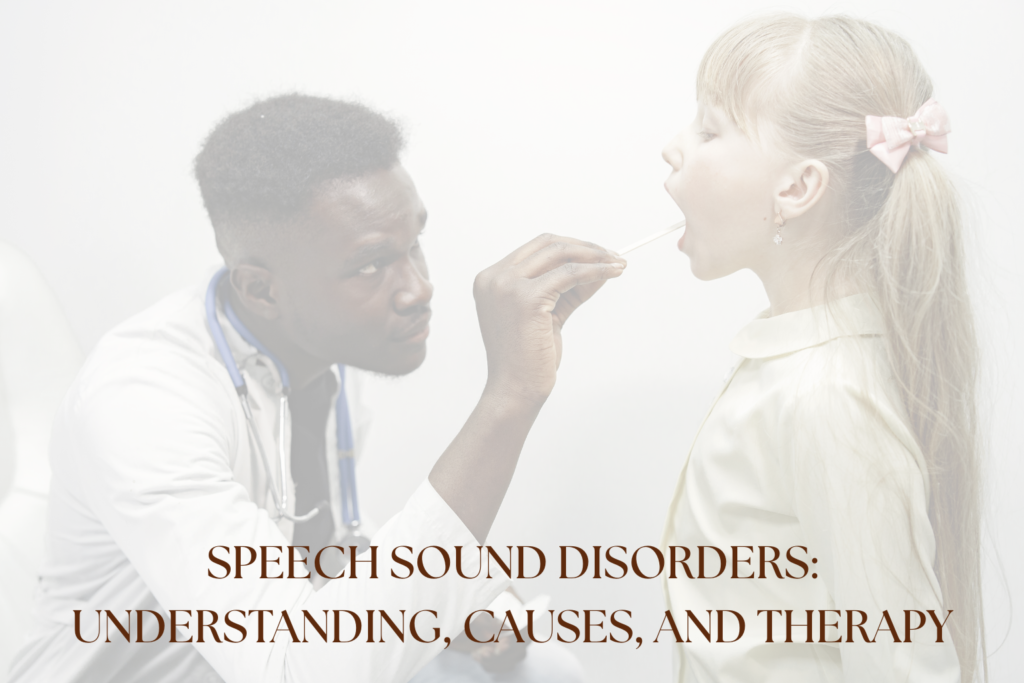
Speech can be regarded as the primary medium of communication. When there are problems with speech sounds, communication may be impaired, which can have an influence on social life, academic life, and even professional life. Speech sound disorders are problems that affect the way an individual can articulate speech sounds correctly, use proper pronunciation to communicate effectively, and speak in a manner that can be easily comprehended.
What are Speech Sound Disorders?
Speech sound disorders are defined as problems making certain speech sounds correctly. The speech sound disorders may include:
- Articulation Errors: This is characterized by a problem making certain sounds correctly, for instance, when someone says “r” instead of “w.”
- Phonological Errors: This is characterized by patterns of speech sound errors, for instance, when someone consistently substitutes sounds.
While articulation is concerned with the physical production of sounds, phonological disorders are concerned with error patterns in speech. SSD can occur in children, adolescents, and adults; it can also lead to a decrease in intelligibility.
Types of Voice Disorders-
- Articulation Disorders – This occurs when a person has difficulty making specific speech sounds due to weakness in their muscles, motor planning, and physical abnormalities.
- Phonological Disorders – This occurs when a person makes a consistent pattern of speech sound errors, which may include stopping (such as “tat” instead of “cat”) and fronting (such as “tar” instead of “car”).
- Apraxia of Speech – This occurs when a person has difficulty planning how to make speech sounds.
- Dysarthria – This occurs as a result of weakness in the muscles used for speech due to a neurological condition.
Each type of SSD may affect communication differently, making early diagnosis critical.
Causes of Voice Disorders –
Several factors contribute to the development of speech sound disorders:
- Developmental Delays – Some children develop speech slower than their peers due to delayed motor or language development.
- Hearing Loss – Difficulty hearing sounds accurately may lead to errors in speech production.
- Structural Issues – Cleft palate, dental problems, or tongue-tie can affect articulation.
- Neurological Disorders – Stroke, cerebral palsy, or brain injuries can impair speech muscle control.
- Environmental Factors – Limited exposure to language or incorrect speech models may result in phonological patterns.
- Genetic Factors – Speech disorders may run in families, indicating a hereditary component.
Symptoms of Speech Sound Disorders
The importance of recognizing speech sound disorders at an early stage should not be underemphasized. Common signs of speech sound disorders are:
- Mispronunciation of words
- Leaving out sounds in words (saying “ca” instead of “cat”)
- Substituting sounds (saying “wabbit” instead of “rabbit”)
- Speech that sounds distorted or unclear
- Difficulty with words that have more than one syllable
Impact on Daily Life
Speech sound disorders can affect multiple aspects of life:
- Social Interaction: Difficulty in being understood can result in embarrassment or shyness.
- Academic Performance: Children can experience problems in reading, spelling, and writing because of phonological problems.
- Professional Communication: Adults can experience a lack of confidence in speaking in public or in a working environment.
- Emotional Well-being: Difficulty in communicating can result in frustration, anxiety, and low self-confidence.
Diagnosis of Speech Sound Disorders
A speech-language pathologist (SLP) is a licensed expert who assesses and diagnoses speech sound disorders. The speech assessment and diagnosis include:
- Case History: This involves the review of the patient’s medical, developmental, and familial history.
- Speech Assessment: This involves the assessment of articulation, phonological, and intelligibility skills.
- Oral Motor Examination: This involves the examination of the lips, tongue, jaw, and palate.
- Hearing Screening: This involves checking whether hearing problems affect speech.
- Functional Communication Assessment: This involves checking speech through interaction in natural conversations.
Treatment Options for Speech Sound Disorders
Treatment is personalized, targeting the specific type of disorder and severity. Approaches include:
- Articulation Therapy – It focuses on improving accurate production of speech sounds, and this is done through repetition, visual, and auditory feedback, and exercises.
- Phonological Therapy – It targets error patterns rather than individual sounds, and this is done through minimal pair therapy, contrast therapy, and sound discrimination.
- Oral-Motor Exercises – It involves strengthening muscles for lips, tongue, jaw, and palate, and this is to improve coordination for clear speech.
- Auditory Discrimination Activities – It teaches a client to hear differences between sounds, and this is then reinforced by listening to accurate production of sounds.
- Home Practice – It involves parents or caregivers practicing exercises consistently, and this is to support progress between therapy sessions.
Tips for Supporting Individuals with Speech Sound Disorders
- Be patient and attentive to what they say
- Promote proper pronunciation without being harsh if they do not
- Use gestures to help them communicate
- Participate in activities such as reading aloud, rhyming games, or speech activities
- Celebrate progress to motivate them
Why Choose Professional Speech Therapy?
Professional speech therapy provides:
- Individualized Plans: Personalized exercises based on specific client requirements
- Expert Guidance: Trained SLPs facilitate therapy with evidence-based practices
- Structured Programs: Gradual progression for constant improvement
- Confidence Boost: Improves social, academic, and professional communication skills
Conclusion –
Speech sound disorders can have a significant impact on communication, confidence, and overall quality of life. Therefore, early identification, therapy, and support are essential in ensuring improved speech, articulation, and effective communication. It is possible for individuals, both young and old, to improve their articulation, eliminate phonological patterns, and build confidence in effective communication through the right intervention.
If you, or someone you know, is affected by speech sound disorders, consider seeking the services of a licensed speech-language pathologist today!