
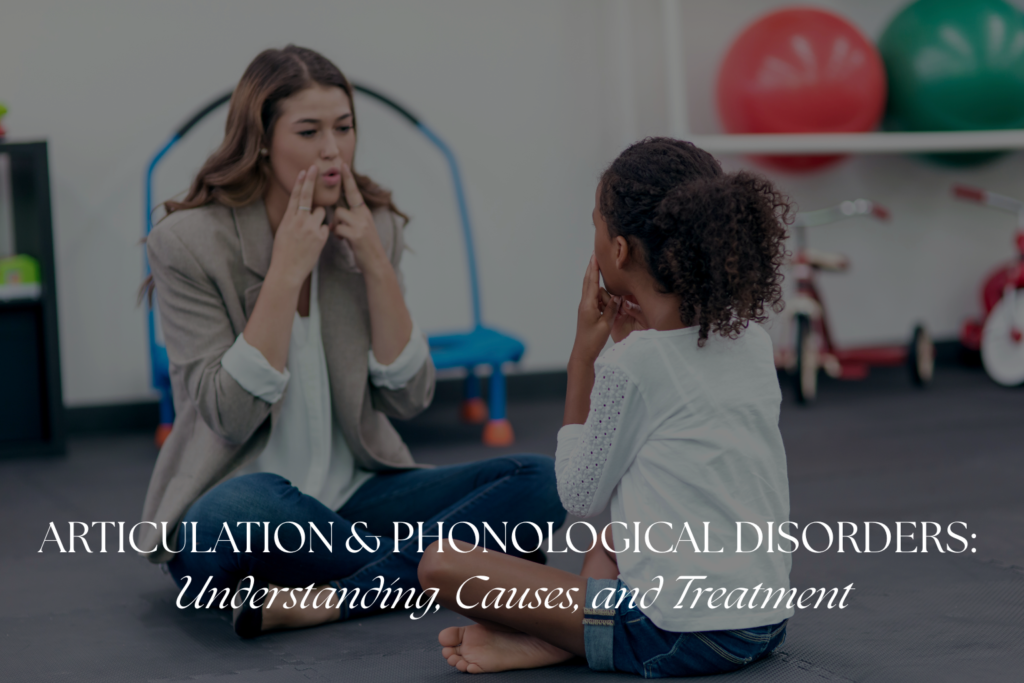
Effective communication is vital in our daily lives. When an individual has problems with articulation or phonological disorders, they are unable to communicate effectively through the pronunciation of words. This speech disorder can occur in both children and adults; therefore, understanding its causes, signs, and treatment strategies are vital in improving communication skills.
What are Articulation and Phonological Disorders?
In articulation disorders, a person is said to have difficulty articulating certain speech sounds. The articulation disorder occurs because of problems in the lips, tongue, teeth, and jaw. For example, someone who pronounces “r” as “w” or someone who pronounces “th” as “t” is said to have an articulation disorder.
In phonological disorders, a person does not pronounce sounds correctly. Phonological disorders are different from articulation disorders in that in articulation disorders, sounds are individually wrong,
while in phonological disorders, sounds are wrong in patterns. For example, someone who pronounces “cat” as “tat” or “plane” as “pane” is said to have a phonological disorder.
Causes of Articulation & Phonological Disorders–
Speech sound disorders can result from a combination of physical, neurological, and developmental factors. Common causes include:
- Structural Issues – Problems with the teeth, tongue, lips, or palate, such as cleft lip or palate, can affect speech production.
- Hearing Loss – Difficulty hearing speech sounds can lead to incorrect production or sound substitutions.
- Neurological Disorders – Conditions like cerebral palsy, stroke, or brain injury may impair motor control of speech muscles, causing articulation difficulties.
- Developmental Delays – Some children may develop speech sound disorders due to delays in overall speech and language development.
- Genetic Factors – Speech sound disorders can run in families, indicating a possible genetic component.
- Environmental Factors – Limited exposure to correct speech models or inconsistent language input can contribute to phonological disorders.
Symptoms of Articulation & Phonological Disorders
Identifying speech sound disorders early is crucial for effective intervention. Common symptoms include:
- Substitution of sounds (wabbit instead of rabbit)
- Leaving out sounds (ca instead of cat)
- Changing sounds to make them difficult to understand
- Consistent errors in words
- Having trouble with complex words or sentences
- Having less intelligible speech compared to peers of the same age
Impact on Daily Life
Speech sound disorders can affect several aspects of life:
- Social Interaction: Difficulty being understood may cause the child to feel embarrassed or withdrawn.
- Academic Performance: Children with articulation or phonological disorders may have difficulty with reading, spelling, and writing.
- Professional Communication: An individual with a speech disorder may feel less confident when speaking in a work or social setting.
- Emotional Well-being: Frustration, low self-esteem, and anxiety can occur as a result of communication problems.
Diagnosis:
A licensed speech-language pathologist (SLP) is essential for diagnosing articulation and phonological disorders. The evaluation process typically includes:
- Speech Assessment: Evaluating speech sounds, errors, and speech clarity.
- Oral-Motor Assessment: Evaluating the strength and coordination of lips, tongue, jaw, and palate.
- Hearing Evaluation: Ensuring hearing problems are not contributing to speech problems.
- Language Assessment: Evaluating vocabulary, sentence structure, and overall language ability.
- Case History: Gathering information regarding developmental milestones, past medical history, and family background.
Treatment Options
Early and consistent therapy is key to improving articulation and phonological skills. Treatment is personalized and may include:
1. Articulation Therapy –
- Focuses on correcting speech sounds
- Uses exercises, repetitions, and visual and auditory feedback
- Helps in clarity and pronunciation
2. Phonological Therapy –
- Focuses on patterns of errors rather than speech sounds
- Uses minimal pair therapy, contrast therapy, and pattern therapy
- Helps in proper use of sounds in words and sentences
3. Oral-Motor Exercises –
- Builds strength in lips, tongue, jaw, and soft palate
- Helps in coordination to produce sounds accurately
4. Auditory Discrimination Activities –
- Helps in differentiating between right and wrong sounds
- Helps in reinforcing right speech patterns
5. Home Practice –
- Practicing at home is essential for successful therapy
- Parents/caregivers are taught how to practice at home
Tips for Supporting Individuals with Speech Sound Disorders
- Speak clearly and slowly, giving them time to answer
- Encourage them to make the right pronunciation without pressuring them
- Use visual aids, hand gestures, or phonetic cards to help them learn
- Read books together, including rhyming games, to help them recognize the sounds
- Celebrate small improvements to make them feel confident
Why Choose Professional Speech Therapy?
Professional therapy ensures:
- Personalized Approach: Exercises and therapy objectives are tailored to each individual
- Expert Guidance: Speech-language pathologists are experts in the field
- Evidence-Based Methods: Methods used are proven to be effective in the treatment of articulation and phonological disorders
- Confidence Building: Helps build confidence in social, academic, and professional communication
Conclusion –
Articulation and phonological disorder can affect an individual’s communication skills, but with early intervention and proper therapy, the difference can be amazing.
Children and adults alike can overcome speech sound disorders and communicate effectively through proper therapy and support from a professional.
If you or your loved ones face any speech sound disorder, seek the services of a licensed speech-language pathologist today and begin your journey to effective communication.